



Our client—a metal processing and manufacturing company—has long faced a common challenge: the employee points platform and the benefits marketplace operate independently, resulting in a poor user experience when employees redeem incentive points for goods; meanwhile, the HR team has to coordinate with multiple suppliers and serve thousands of employees, creating a heavy management burden.
To enhance employee experience and management efficiency, the client selects CDP as its flexible benefits partner. CDP provides a standardized benefits marketplace and seamlessly integrates it with the existing employee platform with exceptional flexibility, successfully connecting the points systems and achieving a smooth migration within just over a month. Additionally, the solution reserves expansion pathways for future employee benefit modules, such as commercial insurance and health management.
Benefits Management Challenges: Disconnected Systems, Cumbersome Processes, and Data Lags
HR departments often face this dilemma: despite carefully designed points-based incentive systems, employees complain constantly, while HR management is bogged down by multiple vendors and cumbersome processes... Typical challenges in benefits management include the following three aspects:
1. Disconnect Between Points and the Benefits Marketplace, Making Redemption Inconvenient
Corporate HR teams frequently encounter this scenario: a top-performing employee receives a 500-point reward but discovers that these points can only be redeemed for a limited selection of items within the old system. They might want to choose a study lamp for their family, but the system doesn't offer it; while the benefits marketplace has a wide selection, points cannot be used across platforms. Employees' real needs go unmet, the company's employee benefits budget fails to translate into a tangible sense of gain for employees, and the incentive effect is significantly diminished.
2. Multiple Suppliers Operating in Parallel, Heavy Burden on HR Management
During holidays or health check-up seasons, the company's HR team must coordinate with multiple suppliers simultaneously—including insurance providers, health check-up providers, holiday gift suppliers, and incentive distributors—each with its own independent backend, processes, and reconciliation methods. When employees encounter issues such as scheduling errors, delayed claims, or missing vouchers, they turn to HR for resolution. This fragmented management model causes the HR team to spend excessive time on operational coordination, making it difficult to focus on core tasks like talent development.
3. Insufficient Data Aggregation Capabilities, Leading to Disorganized Benefits Management
The company's management tasks the HR team with improving employee satisfaction while maintaining the total benefits budget, and with regularly submitting quantifiable data on the return on benefits investment. However, the current system lacks digital capabilities such as a mobile-friendly benefits marketplace or data dashboards. To analyze employee points and benefits usage, HR must constantly switch between scattered spreadsheets. A digital upgrade of benefits management is imperative.
Benefits Management Upgrade: Stable Integration, One-Stop Mall, Data-Driven
To address the company's needs for benefits management upgrades, CDP centers its solution around a flexible benefits mall. By leveraging flexible and stable technology to integrate with the existing system—with plans to expand into commercial insurance and health benefits in the future—CDP creates a digital, comprehensive employee benefits ecosystem.
1. Stable Integration with Existing Systems
The CDP team quickly coordinates with the client's HR team to precisely identify the core requirement of integrating the points system. Subsequently, within just over a month, the CDP technical team finalizes the integration plan, enabling seamless communication between the company's existing employee system and the CDP benefits platform. Every point earned by employees in the original system can be converted into "Fudou" on the CDP platform, which can be directly redeemed in the marketplace. The CDP benefits platform also supports "points + cash" hybrid payments; when employees lack sufficient points, they can cover the difference via WeChat Pay or Alipay, transforming incentive points into truly flexible purchasing power for benefits.
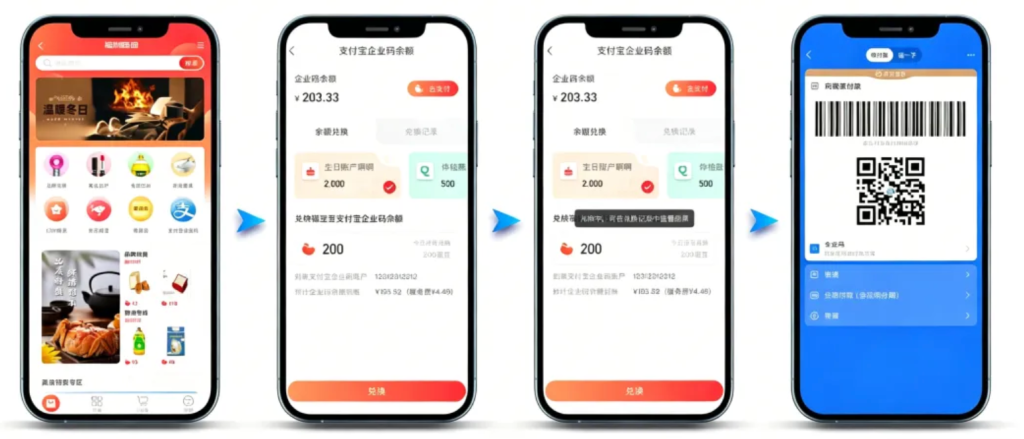
Fudou supports a variety of usage scenarios, significantly increasing the flexibility of incentive redemption.
2. One-Stop Mall with Scalability
The CDP Benefits Mall integrates over 1,000 brands and more than 50,000 SKUs, covering categories such as daily necessities, e-vouchers, and transportation, and supports the creation of custom corporate sections. After integrating the CDP Flexible Benefits Mall, employees are no longer limited to passively accepting benefits uniformly distributed by the company. Instead, they can independently select desired items from a vast product pool based on their personal and family needs. This benefits management model—shifting from "uniform distribution to active selection"—not only meets the diverse needs of employees but also enhances their perception of and satisfaction with corporate benefits. In the future, leveraging CDP's benefits ecosystem, the company plans to further expand into commercial insurance and health management.
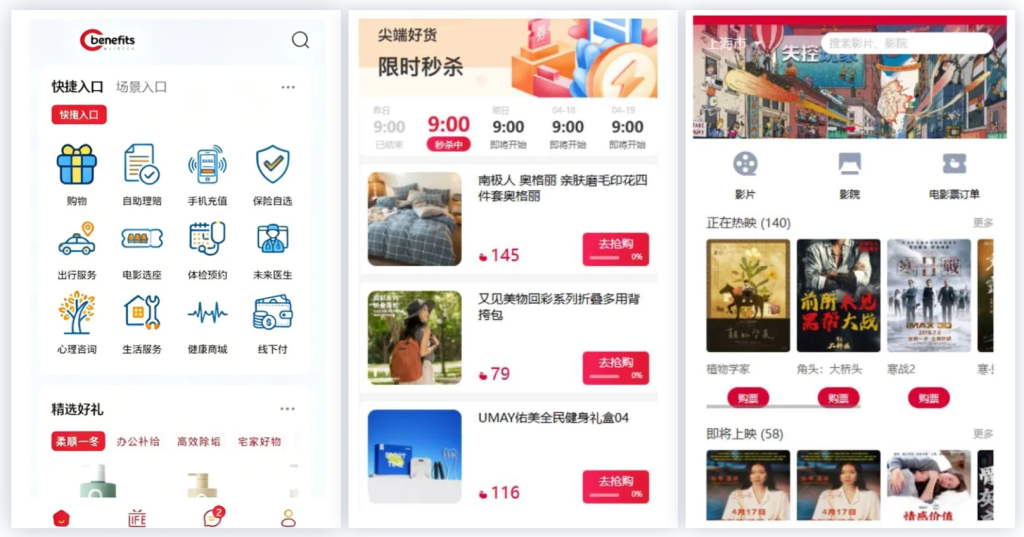
The CDP Benefits Marketplace covers a wide range of usage scenarios, including physical product redemption, e-vouchers, transportation, and holiday-themed customizations, allowing employees to make independent choices based on their personal needs.
3. Data-Driven: Empowering Operations and Reporting
Through the CDP platform's backend, the company's HR team can access multi-dimensional data analytics dashboards while fully safeguarding employee data privacy. This shifts benefits management from being experience-driven to data-driven: HR can analyze the return on investment of employee benefits based on clear data reports, quantify the outcomes of benefits operations, and provide a solid basis for subsequent budget requests and strategy adjustments.
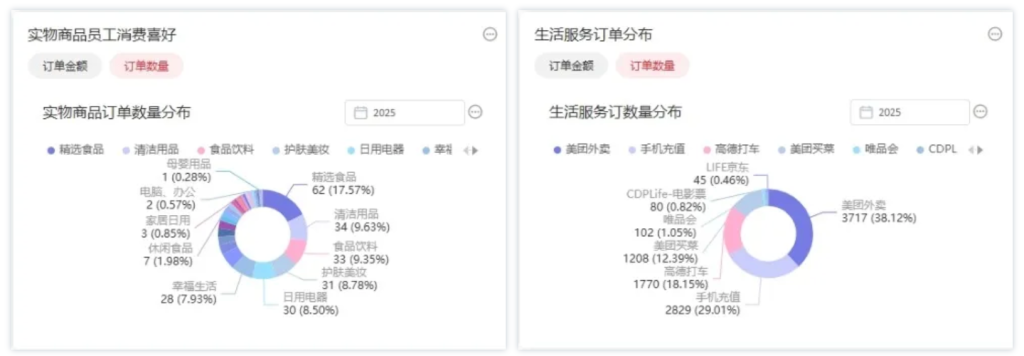
The CDP platform's dashboards enable HR to clearly monitor the operational status of employee benefits.
Summary: Integration, Streamlining, and Empowerment
By integrating the CDP Flexible Benefits Platform, the company achieves significant results in the following areas:
- System Integration, Enhanced Experience: By integrating the existing points system with the benefits marketplace, the employee redemption process is simplified from multiple steps to a single click. Employees can freely choose from a vast selection of products, meeting diverse needs.
- Unified Management, Reduced Burden, Increased Efficiency: By eliminating the need to coordinate with multiple vendors and leveraging digital management, the company significantly reduces HR's administrative workload, allowing HR to focus more on core functions such as organizational development.
- Data-Driven Decision-Making: A data analytics dashboard enables HR to quantify the return on investment (ROI) of benefits, providing a solid foundation for budget planning and strategic adjustments.
Facing the multiple challenges of fragmented systems, complex vendor relationships, and outdated data in benefits management, CDP centers its solution around a flexible benefits marketplace. By seamlessly integrating with the existing employee platform through flexible and stable technical interfaces, CDP achieves points interoperability and hybrid payment capabilities within just over a month. Additionally, it integrates a one-stop marketplace while reserving expansion capabilities for insurance and health management, complemented by data analytics dashboards to provide HR with clear operational and decision-making support.
CDP helps this client achieve digital transformation, significantly enhancing employees' perception of and satisfaction with benefits, while freeing HR from tedious administrative coordination tasks. Benefits management is now deeply integrated into corporate strategy, serving as a key lever in talent competition and providing sustained momentum for the company's long-term development.